

Sensitive stomach dog food — what to look for and which brands help
If your dog has unpredictable stools, frequent wind or vomits bile on an empty stomach, the cause may be a sensitive stomach rather than an illness. This guide covers the signs, the most common triggers, and which specialist formulas genuinely help — with options we currently ship across the UK.
What are the signs your dog has a sensitive stomach?
Most dogs with a sensitive stomach show one or more of:
- Loose or inconsistent stools that aren't explained by a sudden change or infection
- Stools alternating between soft and firm without a clear pattern
- Bile vomiting first thing in the morning, especially in younger dogs
- Foul-smelling gas more than a couple of times a week
- Eating grass often
What are the most common sensitive stomach triggers in dogs?

| Trigger | Frequency | Fix |
|---|---|---|
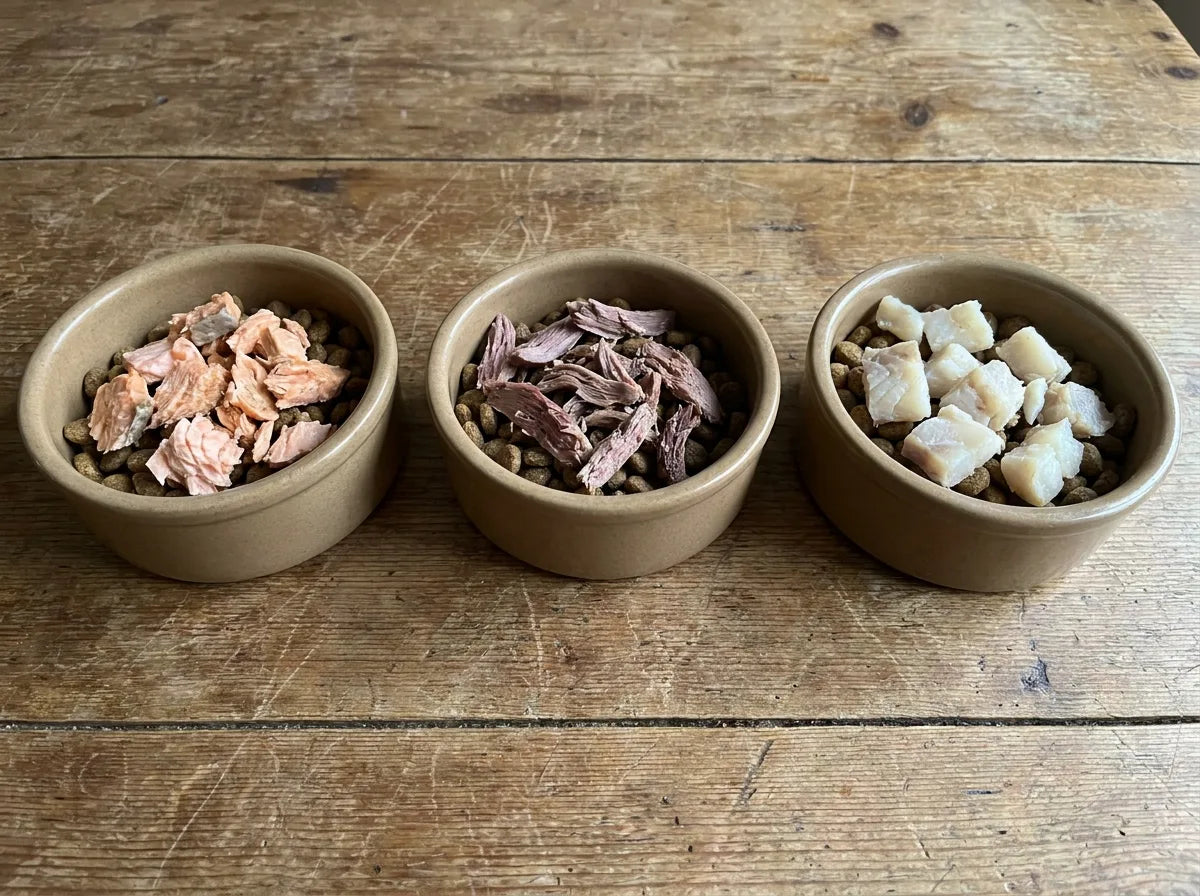
| Chicken | Most common protein | Limited-ingredient novel protein |
| Wheat / gluten | Common | Wheat-free formula |
| Beef | Second-most common | Switch to duck, salmon, white fish |
| Additives & colourings | Common | Pick a recipe with no E-numbers |
What should you look for in a sensitive stomach dog food?
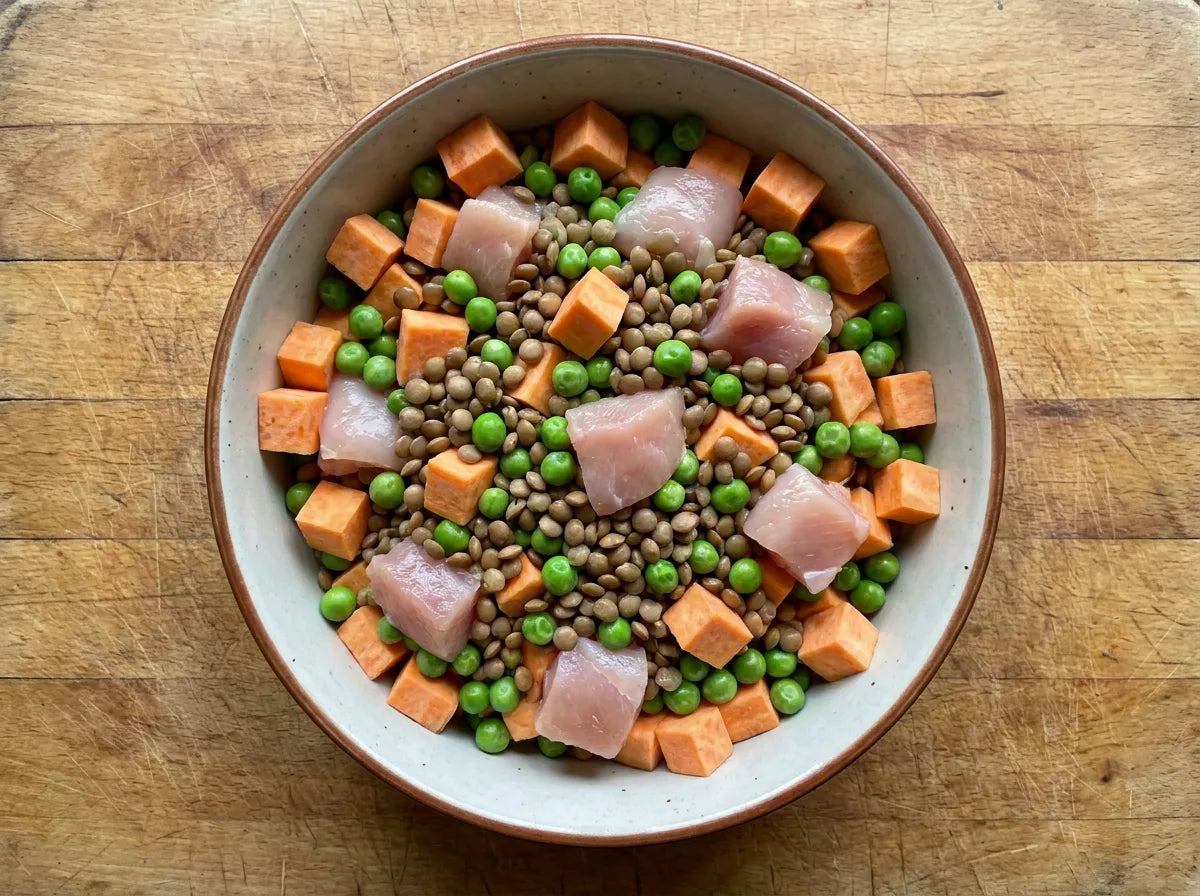
- Named, single protein at the top of the ingredient list, not "meat and animal derivatives".
- Limited ingredients — fewer items on the label.
- No artificial colours — avoid E numbers in the ingredients panel.
- Added prebiotics or probiotics — supports the gut microbiome during the switch.
Which sensitive stomach dog food brands do we recommend?
- Skinner's Field & Trial Salmon & Rice — single-protein, wheat-free.
- Burns Sensitive Pork & Potato — original Burns recipe.
- Burns Hypoallergenic Chicken & Rice — chicken-based alternative.
- Harringtons Grain Free Salmon — gentle grain-free fish recipe.
How long does sensitive stomach food take to work?
Sensitive stomach formulas typically take 4-6 weeks to fully settle the gut. If no improvement after 8 weeks, move to a different novel protein — duck first, then salmon — and reassess with your vet.
Need a recommendation? Talk to us — breed, age and a quick description of the symptoms is enough.